



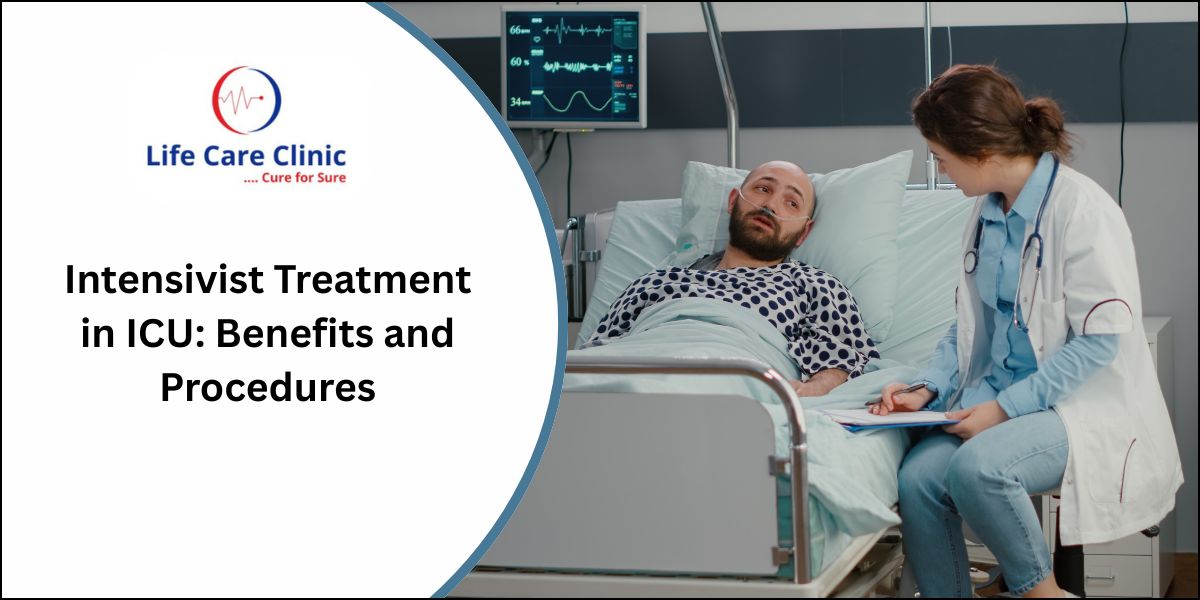
When a family member is admitted to intensive care, the hours often blur into a stream of monitors, alarms, and unfamiliar faces. It is a frightening time, and most families quietly wonder the same thing: who is actually in charge of keeping my loved one alive? In most modern ICUs, that person is an intensivist. Understanding what intensivist treatment in ICU really means can bring a bit of calm to a stressful situation and help you feel more confident about the care being given.
At Life Care Clinic in Hadapsar, Pune, Dr. Meghana Pande has cared for hundreds of critically ill patients as a physician and critical care specialist. This guide walks you through who an intensivist is, the procedures they perform, and the benefits of having one lead care in the ICU.
Who Is an Intensivist?
An intensivist is a doctor with advanced training in critical care medicine, focused entirely on patients who are seriously ill or whose condition can change from one minute to the next. Unlike a general physician who sees a wide range of cases, an intensivist spends their day managing the sickest people in the hospital, coordinating every part of their treatment.
They lead a team of ICU nurses, respiratory therapists, and specialists, tying together input from cardiology, pulmonology, nephrology, and other fields into one clear plan. Think of the intensivist as the captain who reads all the instruments at once and decides where the ship goes next.
What Does Intensivist Treatment in ICU Involve?
Intensivist treatment in ICU involves continuous monitoring, rapid decision-making, and support for organs that are failing or under strain. The goal is to stabilise the patient, treat the root cause of their illness, and prevent complications while the body recovers.
A typical day includes reviewing vital signs, adjusting medications, interpreting lab results and scans, and speaking with families about progress. Because a critically ill patient’s status can shift quickly, the intensivist is available to respond at any hour, which is one of the biggest reasons specialist-led care makes such a difference.
Common Procedures Performed in the ICU
Intensivists are trained to carry out a range of bedside procedures that keep unstable patients safe. Some of the most common include:
- Mechanical ventilation, where a machine supports or takes over breathing when the lungs cannot manage on their own.
- Central line insertion, a thin tube placed into a large vein to give medication, fluids, and nutrition, or to monitor pressures inside the body.
- Arterial line placement for precise, continuous blood pressure readings and easy blood sampling.
- Hemodynamic monitoring, which tracks how well the heart and circulation are working so treatment can be fine-tuned.
- Dialysis support for patients whose kidneys have stopped clearing waste properly.
- Sedation and pain management, kept at just the right level so the patient stays comfortable and safe.
Each of these steps is chosen and adjusted based on the individual patient, not a fixed checklist. That judgement, built on years of experience, is where a skilled intensivist truly earns their place.
What Are the Benefits of Intensivist-Led Care?
The benefits of intensivist-led care are well documented, and they matter most when every hour counts. Patients treated in ICUs staffed by dedicated intensivists tend to have shorter stays, fewer complications, and better survival rates.
Here is why that happens:
- Problems are caught early, because someone with the right training is watching closely and acting fast.
- Care is better coordinated, since one specialist pulls together the whole medical team instead of leaving decisions scattered.
- Complex cases involving the heart, lungs, and kidneys at the same time are managed with a single, consistent plan.
- Families get clearer communication, because the intensivist can explain what is happening and what comes next.
For patients in and around Hadapsar and greater Pune, having quick access to this level of expertise can be the difference between a smooth recovery and a difficult one.
When Is Admission to the ICU Necessary?
ICU admission is needed when a patient’s condition is unstable enough to require constant monitoring or organ support that a regular ward cannot provide. Common reasons include severe infections and sepsis, breathing failure, heart attack, stroke, major surgery recovery, and serious complications of diabetes or blood pressure.
If your doctor recommends the ICU, it is not a sign that hope is lost. It usually means the safest place for close, specialist care is right there, under the eye of an intensivist.
Frequently Asked Questions
1. What is the difference between an intensivist and a general physician?
A general physician treats a broad range of everyday illnesses, while an intensivist specialises only in critically ill patients and organ support in the ICU. The intensivist leads the entire ICU team and manages the most unstable cases.
2. How long does a patient usually stay in the ICU?
It depends entirely on the illness and how the patient responds. Some people stay a day or two, while others with severe conditions may need a week or longer. The aim is always to move them to a regular ward as soon as it is safe.
3. Is intensivist treatment in ICU painful for the patient?
Comfort is a priority. Intensivists use careful sedation and pain management so procedures cause as little distress as possible, while keeping the patient safe and stable.
4. Can family members visit a patient in the ICU?
Most ICUs allow visits during set hours, with some limits to protect patients from infection. The care team will explain the timings and any precautions you need to follow.
5. Does being in the ICU mean my loved one is dying?
No. The ICU is simply the place with the closest monitoring and the most support. Many patients admitted to intensive care recover well and go home.
Expert Intensivist Care Can Make a Life-Saving Difference
Critical illness demands immediate attention, expert decision-making, and continuous monitoring. With the expertise of an experienced intensivist, patients receive advanced, evidence-based treatment tailored to their condition, improving their chances of recovery while providing reassurance to their families.
If you or a loved one requires expert ICU and critical care in Pune, don’t delay seeking professional help. At Life Care Clinic, Hadapsar, Dr. Meghana Pande offers compassionate, specialized intensivist care focused on achieving the best possible outcomes.
Contact us today to schedule a consultation or speak with our team for timely guidance and expert critical care support.